
The heartbreaking news of the death of Malva and one of her cubs Oriana last month has led to rapid response to prevent such a tragedy from happening again.
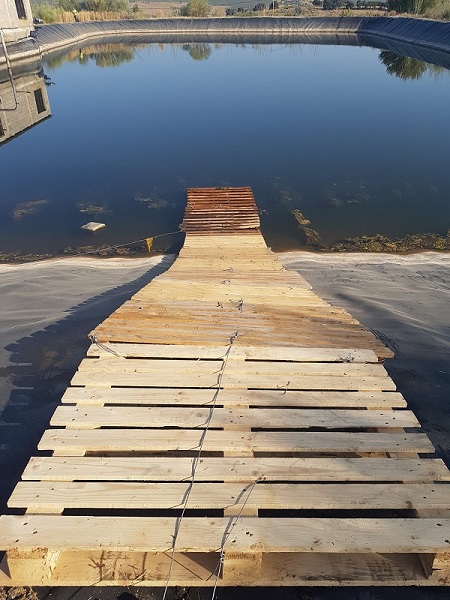
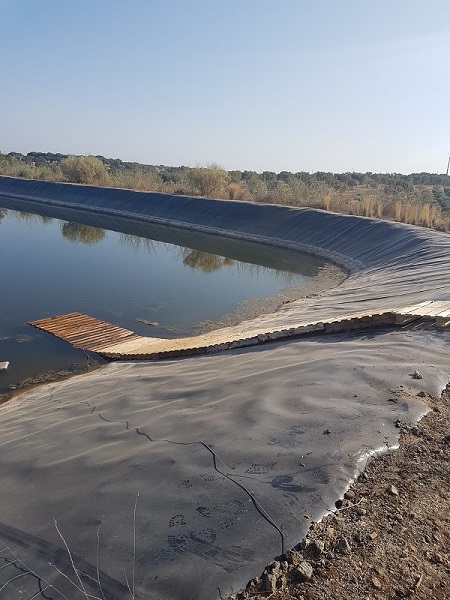
The lynxes were drowned in an artificial lake, known as a ‘charca’ at the end of August, within the reintroduction area, the plastic sides of such artificial ponds and lakes make it impossible for mammals to escape once inside. It is a real tragedy that the fabulously successful reintroduced Iberian lynx 3-year-old Malva and one of her cubs born in 2017, Oriana (see the video of them together below in 2017) have been needlessly lost. But it is heartening to see such a rapid response, and one which will be introduced into all areas of lynx reintroduction and dispersal in Portugal.
The Landowner and the Portuguese Government has acted quickly to prevent further drowning of lynxes. Their statement follows ‘Following the drowning of two lynxes in a watering pond and in order to avoid similar incidents, the owner of the land, with the support of the team of technicians of the Department of Nature Conservation and Forests of Alentejo, implemented a wooden structure that allows the exit of mammals in the pond, even when the water level drops. This is to prevent further drowning of lynx and other species.
The offspring of the female Malva (see video below), that were born this year, are also being monitored by technicians and nature watchers and are well. The ICNF is also investigating other ponds with similar characteristics that may exist in the area of reintroduction or in places where some specimens naturally dispersed and settled.’
Malva with her cubs earlier this year, the ICNF (Nature and Forest Conservation Institute) is following her orphaned cubs closely.
Malva has delighted us with her brood for two years running, giving birth to 8 cubs in two years, she has been a beacon of the success of the reintroduction programme. And her death is not in vain, with these new preventative measures, many animals, as well as endangered lynxes, could be saved from drowning in the hot, dry months of the late Portuguese summer. RIP Malva.
 SOS LYNX