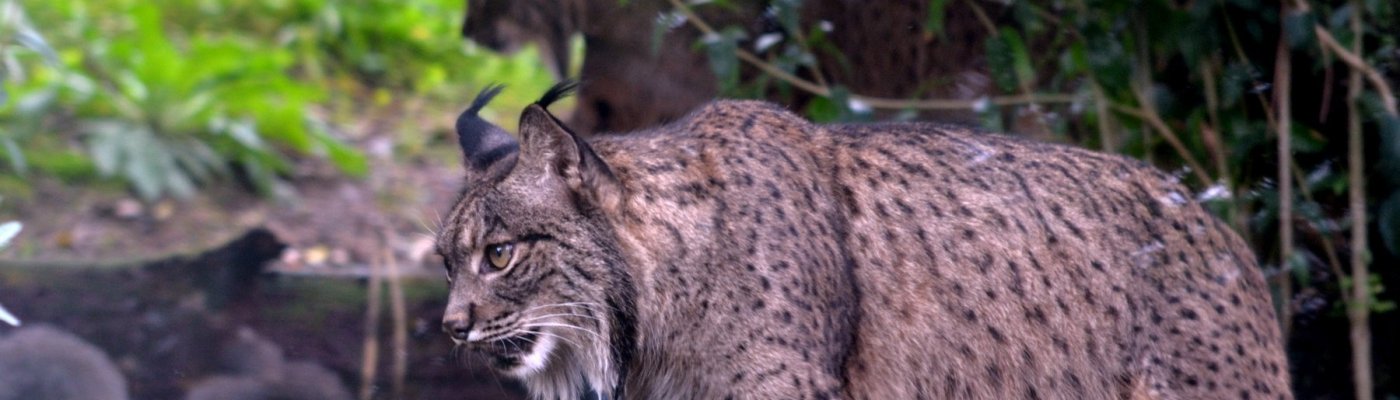
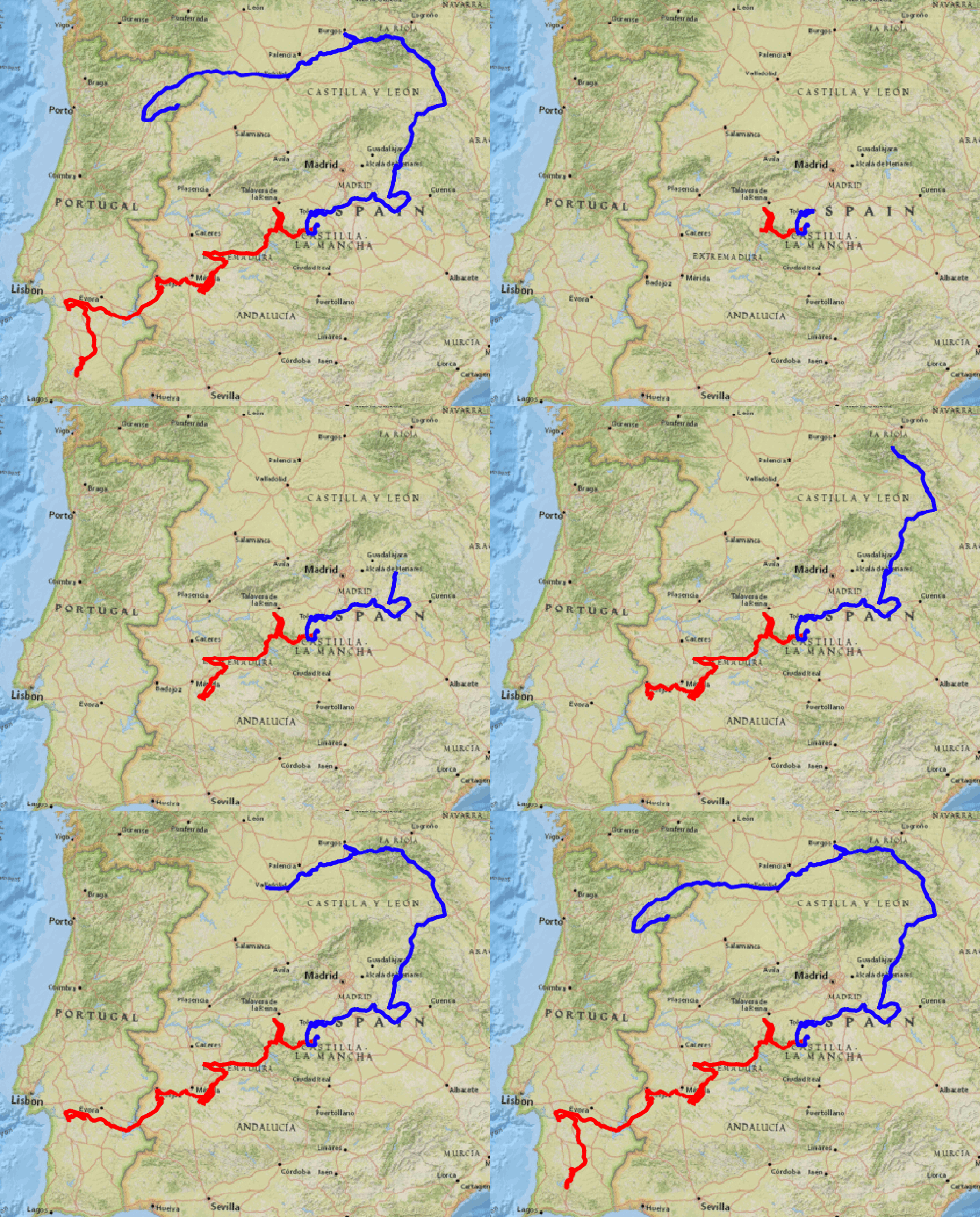
The latest images of wandering lynx ‘Litio’ captured in Barcelona show once again that Iberian lynxes are great travellers, as the incredible map below demonstrates as a GIF of two brothers Kahn and Kentaro, we now know they are capable of travelling thousands of kilometers in search of a mate and suitable territory.
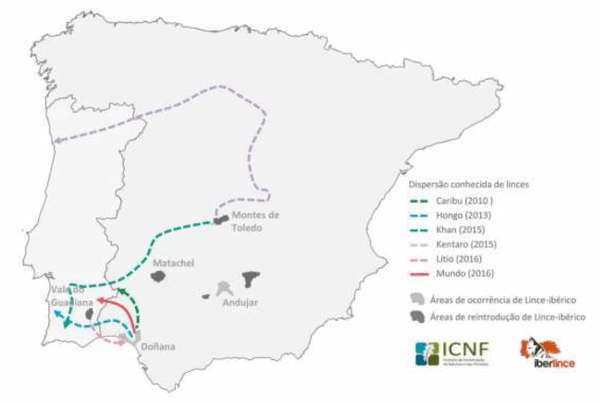
‘Litio’ is the latest of these intrepid travellers, he was one of the lynxes released in Portugal’s Vale do Guadiana area in 2016, he broke the current distance travelled record when he was found in Barcelona, a distance of more than 1,000 kilometers as the crow flies. His exact journey isn’t mapped as he lost his collar a few days after his release. His story was so incredible that it even made it into the English speaking media.
These stories capture our imagination with their drama, we are always hopeful that these wandering males will find true love, like Mundo who travelled 170 kilometres from southern Spain in search of happiness and is now a father to a flourishing lynx family in Portugal.
These long-distance travellers are usually males, like Kentaro who was born in the captive breeding centre in the Algarve and released into the Montes de Toledo in the Castile y La Mancha region of Spain. Kentaro then travelled an estimated 3,000 kilometers as he returned to Portugal, crossing the great Guadiana river, then travelled crisscrossing the country, sadly he was found in the north of Portugal, a victim of a tragic road accident.
Other released males have also travelled great distances, ‘Caribou’ was one of the first shown to travel in 2010, then ‘Hongo’ in 2013, ‘Kahn’ and ‘Kentaro’ in 2015 and most recently ‘Litio’. The risks these males are taking are evident, and as the monitored ones show all too often, they can end in the ultimate tragedy.
As the modern conservation techniques of monitoring with satellite tracking equipment demonstrate we can continue to gather new insights into the habits and abilities of this incredible species. And with this deeper insight, we can continue to learn about, and live in wonder at the world of the Iberian lynx in a way we never could before.
 SOS LYNX

One thought on “The long distance lynxes”